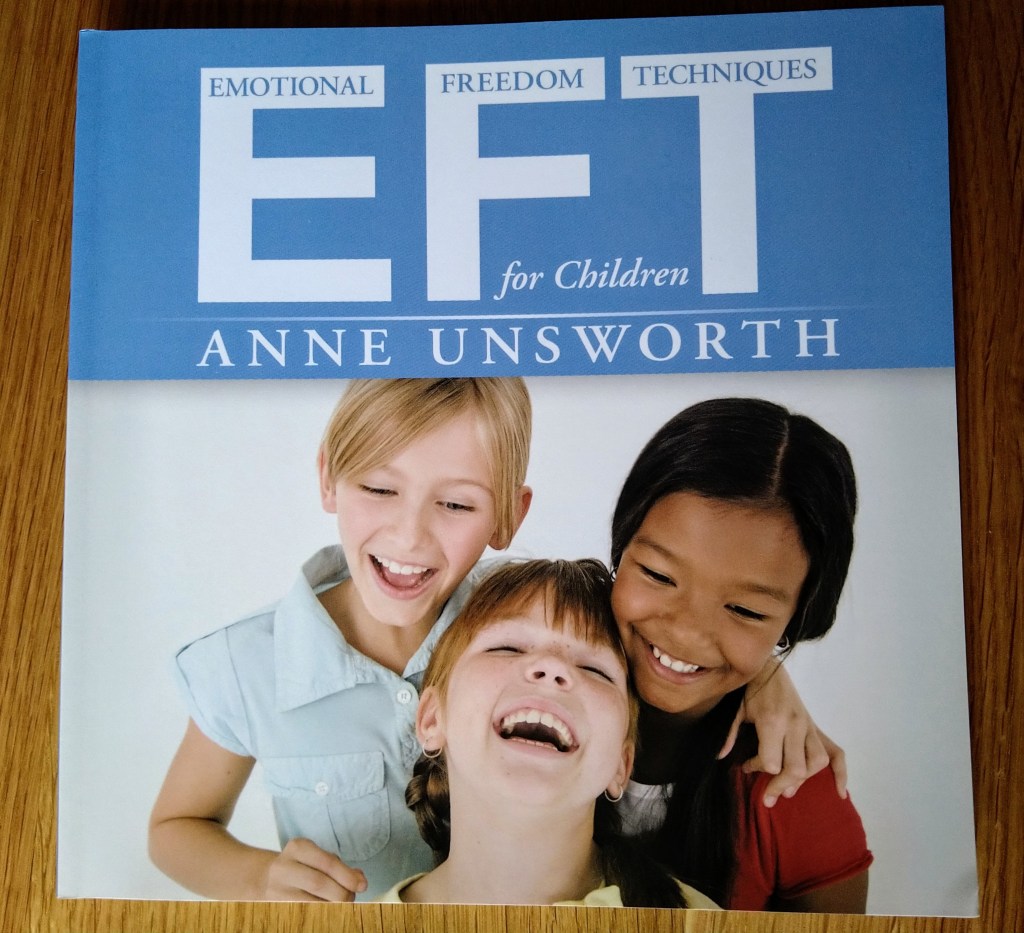
An interview with Anne Unsworth, author of EFT for children.
What is EFT?
“EFT is a way of working with the energy in your body to help you to feel better.”
Is ‘energy work’ real?
“Everything is made up of energy, including your body. You can feel your body’s energy by rubbing your hands together very fast until they are hot. Next pull your hands apart and push them almost together. Now you can feel the energy between your hands.”
Why is EFT good for children?
“It is good for children because it gives them a way to make their energy move and clear out blocks that make them sad or angry in a way they can understand.”
Which ages is EFT appropriate for?
“It is appropriate for children old enough to recognise and name their emotions and to follow simple instructions.”
What if my child doesn’t know why they feel sad/angry/anxious etc?
“It is not about knowing why the emotion is present in children. The process is used at this level to encourage the movement of energy thus releasing the emotion.”
How can I introduce it to my child?
“There is a lot of information available about EFT on the internet and in books. As a parent or carer, you can learn about the basics including what it is and how to tap on the points. It is good to encourage the child to recognise and discuss their emotions and then work some tapping rounds with them. This should not be seen as a task that has to be done but rather a fun activity that you can share.”
Anne Unsworth is the author of ‘EFT for children’, she is an EFT practitioner and Meditation Teacher.
You can contact Anne Unsworth directly on Anne.u@ntlworld.com
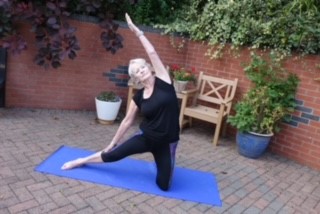
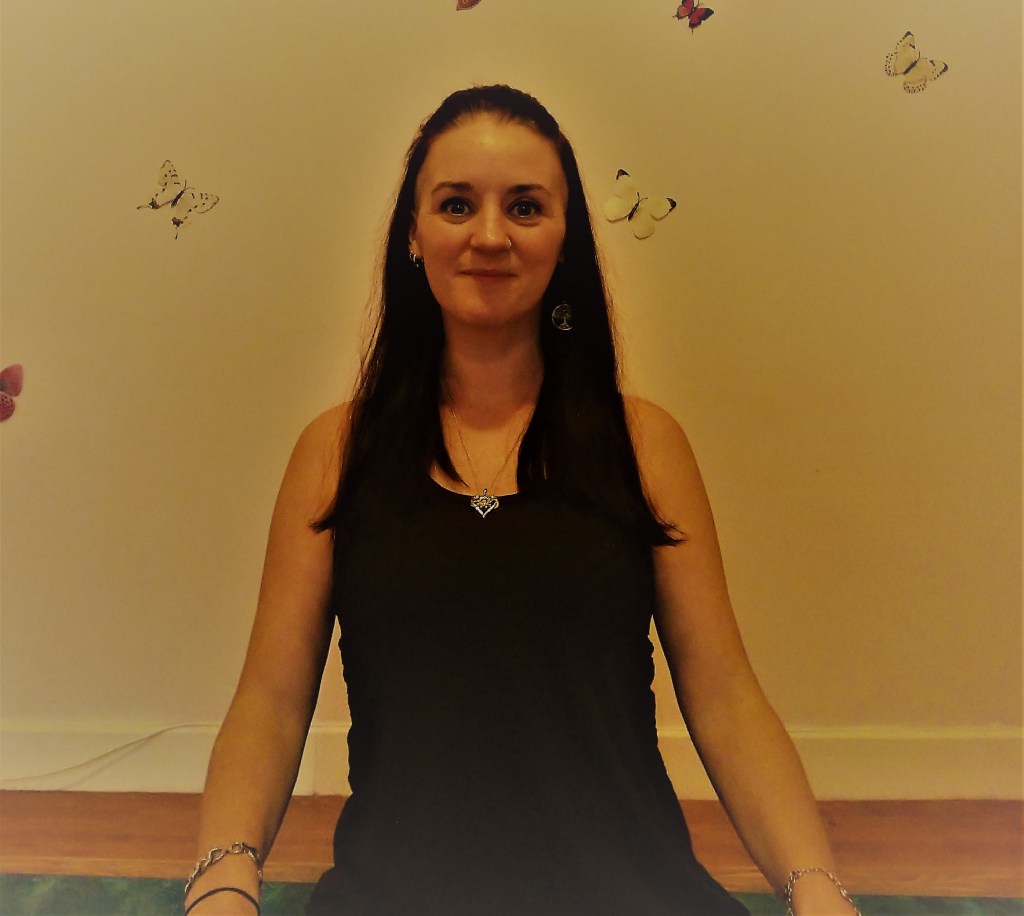
An interview with Gemma, founder of ‘Kids Can Yoga’.
Gemma Unsworth – Founder of ‘Kids Can Yoga’
What is yoga?
“Yoga is hard to define due to so many different types of yoga and so many different perceptions of each type. It can be thought of by some simply as exercise, or by others as a form of meditation, a spiritual practice or a philosophical school of thought.
Yoga means union and my definition of ‘yoga’ at a basic level would be ‘a mind and body workout’.”
What are the benefits of yoga?
“The benefits of yoga are well evidenced and documented and include both physical and mental health benefits, such as strengthening the body, improving balance, flexibility and mood. You can also get specific yoga practices to help with specific problems and an often overlooked benefit is that of joining a community where yoga is practised with others in a class or group.”
Why should children do yoga?
“The benefits of yoga for children have also been well evidenced. Similarly to adults, the benefits are physical, mental and emotional. Although they probably don’t need yoga to alleviate old age aches and pains (!), yoga may equip them with an increased body awareness and mindfulness, help to boost their self esteem, improve their emotional understanding and regulation and enhance their concentration and memory skills.”
How can I introduce my child to yoga?
“There are plenty of free yoga videos for children which you can access for free online. Try and search YouTube or alternatively they could join a zoom class.”
How is Kids Can Yoga any different from others?
“Kids Can Yoga sessions are learning sessions which put well-being first.
Learning should put children’s mental health at the heart of what it does. Then we should ensure that learning is fun, active and inspirational and this is what I try to create.
‘Kids Can Yoga’ is educational yoga for children. It is unique in that the yoga class is based around a national curriculum subject or theme. Therefore children are active and engaged throughout the learning process, and muscle memory will mean the lessons should be more easily recalled due to a greater initial impact. Children also learn breath-work and mindfulness throughout the sessions.
Don’t just take my word for it, check out my website to see others’ testimonials from the sessions and you are welcome to try a session for FREE to see what you think for yourself. Just get in touch and I will happily send you the details.”
“We must make children, and their well-being, the priority.“
You can contact Gemma through the contact form on this website, email kidscanyoga@hotmail.com, or find her on facebook, instagram or twitter.
Home schooling is not the easiest job in the world but there are things we can do to make it easier, even enjoyable for ourselves, and more importantly, our kids.
1. Find what works for you and your family
Every child and every family are unique. What works for Dave may not work for Molly. Find out what works well for your kids, how they learn best, what motivates them, what resources you’ve got (including time) and when, and also what works for you.
2. Routine
Children do actually thrive from routine, they like to know what they can expect as it provides a safety net. However, keep in mind point 1, different routines will fit different families better. Trying to recreate the school timetable at home is not a route I would take personally, find what fits you and yours. For example, although most families seem to go for afternoon walks, we go for a family walk in the mornings, as we have an over-active beagle who needs to get his energy out first thing and my daughter also seems to thrive from these walks. She then seems more happy to focus in the afternoon, when we move on to Maths/English/Topic work. We’ve found a routine that works for us.
However, that doesn’t mean make things monotonous either. You can follow routine and still mix things up a bit – i.e. vary the kind of walks you go on, use different resources when teaching… Change up things within the routine.
3. Make it fun
Cyndi Lauper got it wrong when she sang ‘girls just wanna have fun’, we ALL want to have fun! And that includes your kids. They have to learn some very boring stuff, so try to make it fun for them. For example, you might want to follow their interest of footballers and do maths around goal differences, they may love dinosaurs and you could do additions and subtractions with the same, they may be obsessed with art – great, explore that, look at different artists, write about them, create your own art using different mediums, work out gallery exhibition costs, what ever works for them. I know, some topics are easier to inject fun into than others but there is usually some way, this is why I’ve tried to make phonics and grammar (eurgh!) more interesting by combining them with yoga (check out the free videos on my Youtube channel).
Okay, so nothing is ideal at the moment but we do have the choice of where we place our focus. When I think of all I’ve got to be grateful for, my immediate family and the extra time I get to spend with them all, watching them grow and playing a major role in that, the slower pace of life and time to reflect and change for the better, it certainly makes me happier.
5. Remember, you and your kids, are human
We all have days when we’re on top of the world, home-schooling like a pro, keeping all the plates spinning… and there are others where all the plates seem to smash at once! You will have these kind of days, and your kids will have these days. Everyone has these kind of days! If you’re having one of the bad kind, or your kid is, don’t sweat it. Take a breather, it will probably be of much more benefit to you and your kids than trying to steamroll your way through the day. Take time to breathe, recharge and unwind then try again the next day with a fresh mind and attitude.
If you have anything to add, or if you want to ask me anything, feel free to leave a comment, or message me directly through the contact page.
Mainstream education has very clear cut times throughout the day scheduled for ‘learning time’, which takes up the majority of the day, and ‘play time’, usually 2 scheduled blocks of 15 minutes plus however long the child has left after lunch. For arguments sake, let’s say this is around 30 minutes.
That’s an hour of ‘play’ per school day.
Just 1 hour.
BUT, what if we turned this on its head?
What if, we turn the majority of a child’s day into ‘play time’ and let the children enjoy themselves? As the adults we can find the learning opportunities within that play and continue the natural curiosity and love of learning that I believe children are born with. As I have found more and more, there are learning opportunities in almost every situation in life.
Now obviously, there will be times when their play doesn’t fit your learning agenda. Side-stepping the arguments for and against exclusively child led learning, I suggest that it is our job as adults, role models, parents and/or educators, to make learning fun, so that even where children are to follow an educators lead, we turn that into playtime too.
Can you imagine the adults this kind of learning would produce? Would they be happier? More fulfilled? More confident, curious, creative?
Education is something I think about often, and love to hear others’ views about. Does education, as most dictionaries will tell you, simply pertain to ‘systematic instruction’? Certainly, I would agree that the education system here in the UK does seem to fall under the above definition.
I have, however, come across another definition of education, that of education as an ‘enlightening experience’. How fantastic is that? I love both aspects of this definition:
that education is experiential
that the experience must be enlightening in order to educate the participant
Now, I am an ex-primary school teacher. I know only too well the demands placed on teachers and I am not suggesting for one minute that all of a teachers lessons, all day, 5 days a week should or even could be ‘enlightening’ in our usual sense of the word…
But I am suggesting that for a student to really learn and understand, they must experience the subject. In my experience, once students are engaged in experiential learning, their intrigue and curiosity is ignited and they can’t help but learn, and that ‘learning’ of something new, the deeper understanding, is, I believe, what the ‘enlightenment’ above refers to.


 Go To Yoga